


Why water risk is the next boardroom accountability test
From Greylist to Greyed Out: The Hidden Risk in South Africa’s Payment Infrastructure South Africa faces the risk of being excluded from the global SWIFT payments network if it fails to adopt the ISO 20022 messaging standard by November 2026. The new system replaces older unstructured payment messages with structured digital formats that require precise data fields, including properly formatted addresses. However, South Africa has complex and inconsistent address data due to factors such as informal settlements, farm portions, and broad postal codes that cover multiple areas. This makes it difficult for international banking systems to interpret the data, which could result in cross-border payments being rejected even if funds are available. Improving data quality, standardising address information, and consolidating data from multiple sources will be necessary to ensure the country remains compliant and connected to global financial systems.
Read More
Avoiding the global payment ‘grey out’ and why you are a step ahead
From Greylist to Greyed Out: The Hidden Risk in South Africa’s Payment Infrastructure South Africa faces the risk of being excluded from the global SWIFT payments network if it fails to adopt the ISO 20022 messaging standard by November 2026. The new system replaces older unstructured payment messages with structured digital formats that require precise data fields, including properly formatted addresses. However, South Africa has complex and inconsistent address data due to factors such as informal settlements, farm portions, and broad postal codes that cover multiple areas. This makes it difficult for international banking systems to interpret the data, which could result in cross-border payments being rejected even if funds are available. Improving data quality, standardising address information, and consolidating data from multiple sources will be necessary to ensure the country remains compliant and connected to global financial systems.
Read More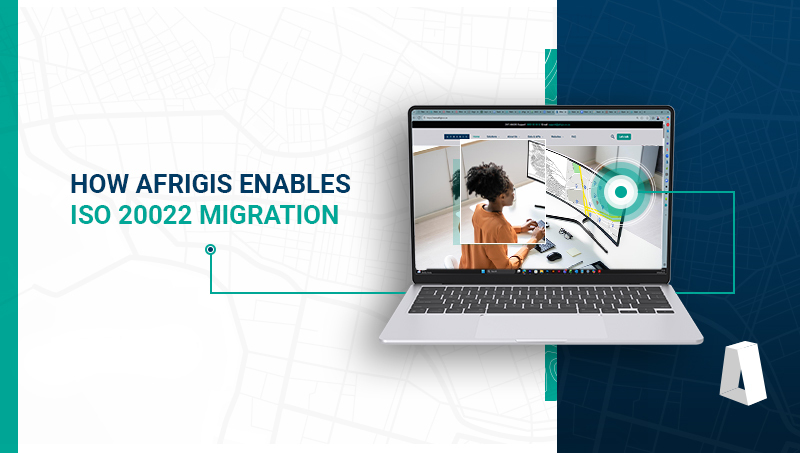
AfriGIS Announcement: Is your data ready for the new ISO 20022 Global standard?
Structured Addresses, Smarter Systems: How GIS Empowers ISO 20022 Compliance and Beyond The global migration to ISO 20022 represents a major evolution in financial data standards, with structured address data becoming compulsory for all cross-border payments from 1 November 2025 to 1 November 2026. This shift is designed to strengthen accuracy, compliance, and transparency across international financial systems. For South Africa, however, the transition introduces unique complexities: multiple postal code variations, informal settlements without street names, and diverse address formats that do not easily fit a rigid global template. Without proper data structuring, institutions risk failed validations, delayed payments, and regulatory penalties. AfriGIS brings more than 20 years of geospatial intelligence expertise to this challenge. Our address database built from cadastral, postal, and satellite data allows us to cleanse, validate and structure address information to meet ISO 20022 standards while preserving critical local context. Through configurable APIs and advanced contextual intelligence, we help banks, fintechs, and corporates achieve seamless compliance and unlock broader benefits, including enhanced risk analysis, accurate geocoding, improved onboarding processes, and a reliable single source of truth for address data across the enterprise.
Read More
Celebrating the Transformative Power of Location Intelligence
AfriGIS Marks GIS Month 2025 by Celebrating the Transformative Power of Location Intelligence AfriGIS proudly marks GIS Month 2025 alongside the international geospatial community, honouring the important role that Geographic Information Systems (GIS) play in shaping our understanding of people, places, and patterns. For AfriGIS, GIS is not just a technical capability it is the foundation of the business and a core enabler of progress across the African continent. By transforming raw geographic data into powerful insight, GIS empowers organisations to make informed decisions, anticipate change, and design solutions that create meaningful impact in society. With more than 20 years of experience at the forefront of geospatial innovation, AfriGIS continues to support governments, enterprises, and developers with verified African data, advanced analytics, and technology platforms that enable efficient planning, stronger infrastructure, improved logistics, and sustainable growth. GIS Month serves as a reminder that every decision has a location, and when data and place are intelligently connected, communities, cities, and industries thrive.
Read More
From Greylist to Greyed Out: The Hidden Risk in South Africa’s Payment Infrastructure
From Greylist to Greyed Out: The Hidden Risk in South Africa’s Payment Infrastructure South Africa faces the risk of being excluded from the global SWIFT payments network if it fails to adopt the ISO 20022 messaging standard by November 2026. The new system replaces older unstructured payment messages with structured digital formats that require precise data fields, including properly formatted addresses. However, South Africa has complex and inconsistent address data due to factors such as informal settlements, farm portions, and broad postal codes that cover multiple areas. This makes it difficult for international banking systems to interpret the data, which could result in cross-border payments being rejected even if funds are available. Improving data quality, standardising address information, and consolidating data from multiple sources will be necessary to ensure the country remains compliant and connected to global financial systems.
Read More
Cloud, Code, and Connection: The AfriGIS Strategy for Youth Empowerment
Cloud, Code, and Connection: The AfriGIS Strategy for Youth Empowerment In a strategic move to address South Africa’s critical digital skills shortage and high youth unemployment, AfriGIS has partnered with Go Fourth to launch the 2026 iteration of its 12-month IT Systems Development Professional Learning Programme. Six selected delegates will undergo a rigorous dual-phase journey, beginning with six months of intensive classroom training followed by six months of immersive, on-the-job mentorship at AfriGIS. The curriculum focuses on essential modern disciplines, including AWS cloud technology, C# and Java programming, and large-scale database design, providing learners with the international certifications and practical experience needed to thrive in a global tech economy.
Read More
How Data-Driven Location Intelligence is Fuelling Africa’s Digital Economy
Faster Deliveries, Smarter Retail: Why Accurate Location Intelligence Is Now the Backbone of Route Optimisation Retailers across South Africa are under pressure to deliver faster, smarter, and more affordably than ever. Yet failed deliveries, duplicate addresses, and poor route planning continue to erode profits and customer trust. AfriGIS is transforming how retailers navigate delivery networks by using verified location intelligence, confidence-level address data, and geospatial insights that improve first-time delivery success. By combining address validation with advanced route optimisation, AfriGIS helps retailers reduce operational costs, prevent delays, and unlock data-driven growth across store planning, trade area analysis, and after-sales delivery management.
Read More
Faster Deliveries, Smarter Retail: Why Accurate Location Intelligence Is Now the Backbone of Route Optimisation
Faster Deliveries, Smarter Retail: Why Accurate Location Intelligence Is Now the Backbone of Route Optimisation Retailers across South Africa are under pressure to deliver faster, smarter, and more affordably than ever. Yet failed deliveries, duplicate addresses, and poor route planning continue to erode profits and customer trust. AfriGIS is transforming how retailers navigate delivery networks by using verified location intelligence, confidence-level address data, and geospatial insights that improve first-time delivery success. By combining address validation with advanced route optimisation, AfriGIS helps retailers reduce operational costs, prevent delays, and unlock data-driven growth across store planning, trade area analysis, and after-sales delivery management.
Read MoreAfriGIS Marks GIS Month 2025 by Celebrating the Transformative Power of Location Intelligence
AfriGIS Marks GIS Month 2025 by Celebrating the Transformative Power of Location Intelligence AfriGIS proudly marks GIS Month 2025 alongside the international geospatial community, honouring the important role that Geographic Information Systems (GIS) play in shaping our understanding of people, places, and patterns. For AfriGIS, GIS is not just a technical capability it is the foundation of the business and a core enabler of progress across the African continent. By transforming raw geographic data into powerful insight, GIS empowers organisations to make informed decisions, anticipate change, and design solutions that create meaningful impact in society. With more than 20 years of experience at the forefront of geospatial innovation, AfriGIS continues to support governments, enterprises, and developers with verified African data, advanced analytics, and technology platforms that enable efficient planning, stronger infrastructure, improved logistics, and sustainable growth. GIS Month serves as a reminder that every decision has a location, and when data and place are intelligently connected, communities, cities, and industries thrive.
Read More
Structured Addresses, Smarter Systems: How GIS Empowers ISO 20022 Compliance and Beyond
Structured Addresses, Smarter Systems: How GIS Empowers ISO 20022 Compliance and Beyond The global migration to ISO 20022 represents a major evolution in financial data standards, with structured address data becoming compulsory for all cross-border payments from 1 November 2025 to 1 November 2026. This shift is designed to strengthen accuracy, compliance, and transparency across international financial systems. For South Africa, however, the transition introduces unique complexities: multiple postal code variations, informal settlements without street names, and diverse address formats that do not easily fit a rigid global template. Without proper data structuring, institutions risk failed validations, delayed payments, and regulatory penalties. AfriGIS brings more than 20 years of geospatial intelligence expertise to this challenge. Our address database built from cadastral, postal, and satellite data allows us to cleanse, validate and structure address information to meet ISO 20022 standards while preserving critical local context. Through configurable APIs and advanced contextual intelligence, we help banks, fintechs, and corporates achieve seamless compliance and unlock broader benefits, including enhanced risk analysis, accurate geocoding, improved onboarding processes, and a reliable single source of truth for address data across the enterprise.
Read More