


How Data-Driven Location Intelligence is Fuelling Africa’s Digital Economy
Faster Deliveries, Smarter Retail: Why Accurate Location Intelligence Is Now the Backbone of Route Optimisation Retailers across South Africa are under pressure to deliver faster, smarter, and more affordably than ever. Yet failed deliveries, duplicate addresses, and poor route planning continue to erode profits and customer trust. AfriGIS is transforming how retailers navigate delivery networks by using verified location intelligence, confidence-level address data, and geospatial insights that improve first-time delivery success. By combining address validation with advanced route optimisation, AfriGIS helps retailers reduce operational costs, prevent delays, and unlock data-driven growth across store planning, trade area analysis, and after-sales delivery management.
Read More
Faster Deliveries, Smarter Retail: Why Accurate Location Intelligence Is Now the Backbone of Route Optimisation
Faster Deliveries, Smarter Retail: Why Accurate Location Intelligence Is Now the Backbone of Route Optimisation Retailers across South Africa are under pressure to deliver faster, smarter, and more affordably than ever. Yet failed deliveries, duplicate addresses, and poor route planning continue to erode profits and customer trust. AfriGIS is transforming how retailers navigate delivery networks by using verified location intelligence, confidence-level address data, and geospatial insights that improve first-time delivery success. By combining address validation with advanced route optimisation, AfriGIS helps retailers reduce operational costs, prevent delays, and unlock data-driven growth across store planning, trade area analysis, and after-sales delivery management.
Read More
AfriGIS Marks GIS Month 2025 by Celebrating the Transformative Power of Location Intelligence
AfriGIS Marks GIS Month 2025 by Celebrating the Transformative Power of Location Intelligence AfriGIS proudly marks GIS Month 2025 alongside the international geospatial community, honouring the important role that Geographic Information Systems (GIS) play in shaping our understanding of people, places, and patterns. For AfriGIS, GIS is not just a technical capability it is the foundation of the business and a core enabler of progress across the African continent. By transforming raw geographic data into powerful insight, GIS empowers organisations to make informed decisions, anticipate change, and design solutions that create meaningful impact in society. With more than 20 years of experience at the forefront of geospatial innovation, AfriGIS continues to support governments, enterprises, and developers with verified African data, advanced analytics, and technology platforms that enable efficient planning, stronger infrastructure, improved logistics, and sustainable growth. GIS Month serves as a reminder that every decision has a location, and when data and place are intelligently connected, communities, cities, and industries thrive.
Read More
Structured Addresses, Smarter Systems: How GIS Empowers ISO 20022 Compliance and Beyond
Structured Addresses, Smarter Systems: How GIS Empowers ISO 20022 Compliance and Beyond The global migration to ISO 20022 represents a major evolution in financial data standards, with structured address data becoming compulsory for all cross-border payments from 1 November 2025 to 1 November 2026. This shift is designed to strengthen accuracy, compliance, and transparency across international financial systems. For South Africa, however, the transition introduces unique complexities: multiple postal code variations, informal settlements without street names, and diverse address formats that do not easily fit a rigid global template. Without proper data structuring, institutions risk failed validations, delayed payments, and regulatory penalties. AfriGIS brings more than 20 years of geospatial intelligence expertise to this challenge. Our address database built from cadastral, postal, and satellite data allows us to cleanse, validate and structure address information to meet ISO 20022 standards while preserving critical local context. Through configurable APIs and advanced contextual intelligence, we help banks, fintechs, and corporates achieve seamless compliance and unlock broader benefits, including enhanced risk analysis, accurate geocoding, improved onboarding processes, and a reliable single source of truth for address data across the enterprise.
Read More
From Click to Doorstep: Optimising Last-Mile Delivery with GIS
From Click to Doorstep: Optimising Last-Mile Delivery with GIS In South Africa, where no unified National Address Database exists, inaccurate or incomplete addresses can break an entire delivery chain. Every failed delivery impacts not only profitability but also customer confidence and operational efficiency. That’s where AfriGIS makes the difference. Through our validated geospatial intelligence platform encompassing over 53 million searchable addresses across formal and informal areas we deliver the accuracy that logistics companies depend on to keep operations running seamlessly. AfriGIS transforms complex location data into actionable business intelligence. From optimising routes and reducing failed deliveries to unlocking new markets and ensuring cross-border precision, our data-driven solutions empower logistics providers to deliver with confidence. In an industry where precision defines success, AfriGIS ensures that every parcel, every time, reaches exactly where it’s meant to go safely, efficiently, and profitably.
Read More
Turning Strategy into Action: How AfriGIS Supports South Africa’s Geospatial Information Management Strategy
The launch of the Geospatial Information Management Strategy (GIMS) represents a turning point in South Africa’s pursuit of a more coordinated, data-driven approach to governance. It brings together the National Development Plan 2030, the Medium-Term Development Plan, the National Spatial Development Framework, and the District Development Model under one unified strategy. This alignment empowers government to identify infrastructure gaps, allocate resources more efficiently, and monitor progress in real time. For AfriGIS, this moment underscores our core purpose: to provide verified, Africa-specific geospatial intelligence that transforms data into insights for smarter planning, service delivery, and national development. Our work supports the goals of GIMS by closing South Africa’s most persistent data gaps particularly in informal settlements and rural areas through verified local intelligence, satellite imagery, field verification, and advanced analytics. By offering this detailed, real-world view, we help decision-makers act with precision and purpose. Together with government, business, and communities, AfriGIS is helping to build a spatially intelligent state one where every decision is informed by reliable data, every service is delivered with intent, and every citizen benefits from equitable development.
Read More
Last Mile Delivery and E-Commerce Solutions
Last Mile Delivery and E-Commerce Solutions AfriGIS (Pretoria, South Africa – 10 November 2025) In the fast-evolving landscape of e-commerce, efficient and reliable last mile delivery isn’t just a differentiator it’s essential for business growth and customer trust. AfriGIS delivers contextual insights and location intelligence solutions that empower logistics providers and retailers to optimise their delivery operations whether navigating bustling cities or rural landscapes across Africa. Precision Address Validation and Geocoding Accurate deliveries start with accurate addresses. One of the biggest hurdles in last mile delivery is tackling incomplete or inaccurate address data, which leads to failed drop-offs, repeated delivery attempts and dissatisfied customers. At AfriGIS we solve this using advanced address validation and geocoding technology that standardises, cleanses and verifies addresses, pinpointing the precise latitude and longitude for every stop. This ensures your delivery teams and your customers know exactly where packages need to go, improving first-time delivery rates and eliminating unnecessary delays. Optimising Delivery Operations Every successful journey is built on seamless integration and smart planning. Our geo-enabled APIs plug directly into your existing systems, powering accurate route planning, dispatch management and real-time delivery tracking. These optimisations drive down operational costs, minimise delays, and create a superior customer experience turning your last mile into a true competitive advantage. Supporting Africa’s E-Commerce Boom Africa’s digital retail space is growing rapidly, with more consumers demanding fast, secure deliveries wherever they are. Our solutions are tailor-made for the continent’s unique geography: managing urban expansion, informal settlements and rural areas where traditional addresses may not exist. Leveraging AfriGIS’s location intelligence, e-commerce businesses unlock new growth, connect with more customers and set a new standard for delivery performance across diverse markets. Proven Partnership Success Leading logistics providers such as DSV, a global Transport and Logistics organisation transforms their delivery operations handling millions of parcels monthly with precision and efficiency. For example, a major logistics client increased first-time delivery success from below industry average to 93% within two years of implementing AfriGIS address validation. This resulted in substantial cost savings, reduced friction and increased customer satisfaction without adding new vehicles or major operational changes. Our technology empowers you to outpace the competition by making every delivery count. Why Choose AfriGIS? Over 53 million searchable addresses and active business names Coverage from city centres to rural villages and informal settlements Real-world results: higher first-time delivery success, lower operational costs Reliable, scalable technology trusted by Africa’s leading logistics and e-commerce brands At AfriGIS, we help you know exactly where you’re going making every delivery smarter, faster and right the first time. Learn more about our Last Mile Delivery and E-commerce Solution and schedule a free consultation. Thank you, AfriGIS Products Team
Read More
The Highs, the Lows, and What’s Ahead in 2025
Geospatial in Africa: The Highs, the Lows, and What’s Ahead in 2025 AfriGIS (Pretoria, South Africa – 06 October 2025) 2025 has been a year of both promise and challenge for Africa’s geospatial industry. Across the continent, location intelligence is helping cities grow smarter, businesses operate more efficiently, and communities access essential services. Yet while progress has been significant, the journey has not been without obstacles. Celebrating Milestones According to the 2025 United Nations Globa Geospatial Information Management (UN-GGIM) Africa report, African countries have made strides in embedding geospatial data into decision-making. Key achievements include: National Progress: Cameroon, Mali, Mozambique, and Rwanda have advanced action plans under the Integrated Geospatial Information Framework (IGIF), strengthening data infrastructures and aligning spatial data with sustainable development goals. Skills Development: Workshops and expert consultations are enhancing geospatial management skills, particularly for census work and development tracking. Technological Adoption: AI and digital twin technologies are beginning to reshape urban planning, enabling cities to anticipate challenges before they arise. Industry Growth: The Africa Geospatial Expo 2025 projected sector growth to US\$100 billion by 2030, highlighting its strategic importance across industries including healthcare, logistics, and finance. Challenges Along the Way Despite these milestones, the industry faces persistent challenges that slow momentum. These include: Skills Gaps: While GIS is included in university curricula, many business schools lack updated training on applying geospatial data for strategic decision-making. Limited Adoption: Many businesses remain unaware of the potential of geospatial tools, resulting in underutilisation across sectors. Data and Governance Issues: Outdated spatial data and fragmented policy frameworks continue to hinder the effective deployment of solutions. To address these challenges, stakeholders are leveraging public-private partnerships (PPPs), capacity-building initiatives, and policy reforms. AfriGIS has contributed by improving data quality and accessibility, promoting digital twin technology, and helping clients integrate geospatial intelligence into planning, compliance, and risk management. The Rise of Transformative Technologies Geospatial Technology One of the most exciting areas of growth is Geospatial technology. Driven by widespread smartphone penetration, improved connectivity, and regulatory requirements, Geospatial technology is reshaping industries across Africa. Specifically, it's being used in: Healthcare: to optimise access to clinics and improve outbreak response. Logistics: to enhance fleet management and delivery accuracy. Retail: retailers use it to target customers more effectively and to expand reach. Governments: apply it to map underserved areas and improve service delivery. AfriGIS APIs now support over 50 million searchable address combinations, enabling hyper-local insights that are transforming decision-making across sectors. Digital Twins: Planning Cities Before they are Built Digital twins (virtual replicas of cities and infrastructure) allow planners to simulate scenarios technology such as traffic flows, energy demand, and population growth. This capability makes infrastructure planning more resilient and efficient. Projects like the University of Pretoria’s Hatfield Digital Twin City demonstrate how technology can enhance urban management, citizen engagement, and service delivery. Contextual Insights for Sustainability Contextual insights integrate geospatial intelligence with real-world (environmental, demographic, and infrastructure) data to drive sustainable decision-making. Platforms like Resolve Water help businesses and municipalities manage water scarcity and risk, while supporting ESG compliance and equitable resource allocation. By turning raw data into actionable intelligence, contextual insights are advancing ESG goals, smart city development, and resilient infrastructure. Better Data, Better Decisions 2025 has also seen significant improvements in geospatial data quality and accessibility. AfriGIS has committed to: Quarterly Data Releases: ensuring datasets are up-to-date and validated. New Tools: APIs such as the Flood Hazard Index and platforms like Iris provide interactive, real-time access. Measurable Impact: Outcomes across sectors include reduced banking risk (40%), fewer fraudulent insurance claims (25%), increased retailer foot traffic (15%), and improved agricultural yields (18%). Looking Ahead: The Road for 2025 and Beyond Emerging technologies will continue to shape Africa’s geospatial landscape: AI-Driven Geospatial Intelligence: enabling predictive analytics and dynamic decision-making. High-Precision Mapping and LiDAR: Supporting urban planning and infrastructure audits. Spatial Computing and Digital Twins: Modelling cities and optimising resource allocation. ESG-Focused Platforms: Tools like Resolve Water helping businesses address climate and water risks. Collaboration as the Cornerstone Ultimately, the geospatial industry in Africa cannot reach its potential in isolation. Governments provide regulatory authority and reach, while private companies contribute agility, innovation, and investment. Public-private partnerships are essential for scaling solutions such as smart cities, climate adaptation, disaster response, and resilient infrastructure. The Path Forward Africa’s geospatial industry demonstrates that technology alone is not enough. Its true power lies in application; integrating data with context, building skills, fostering partnerships, and creating solutions that benefit communities. The highs of 2025 show what is possible when innovation meets purpose. The lows remind us there is more work to be done. With continued collaboration, investment, and innovation, Africa is poised to harness geospatial intelligence for smarter decisions, resilient communities, and a sustainable future.
Read More
Geospatial in Africa: The Highs, the Lows, and What’s Ahead in 2025
Geospatial in Africa: The Highs, the Lows, and What’s Ahead in 2025 2025 has been a year of progress and challenges for Africa’s geospatial industry. From embedding data into national decision-making to adopting transformative technologies such as AI, digital twins, and location-based services, the sector is reshaping urban planning, healthcare, logistics, and governance. According to the UN-GGIM Africa report, countries like Cameroon, Mali, Mozambique, and Rwanda are strengthening geospatial infrastructures under the IGIF, while initiatives like the Africa Geospatial Expo 2025 project growth to US$100 billion by 2030. AfriGIS has played a key role by improving data quality, expanding APIs to support over 50 million searchable addresses, and launching tools such as the Flood Hazard Index and Iris, driving measurable impacts across finance, agriculture, and retail. Yet, persistent challenges remain. Skills gaps in higher education, limited adoption of geospatial tools by businesses, and outdated or fragmented policy frameworks continue to slow progress. Stakeholders are addressing these issues through capacity-building, policy reforms, and public-private partnerships. Looking ahead, AI-driven intelligence, high-precision mapping, and ESG-focused platforms will shape the industry, but collaboration will be critical. Africa’s geospatial journey shows that innovation alone is not enough the power lies in application, partnerships, and using data to build smarter cities, resilient communities, and sustainable futures.
Read More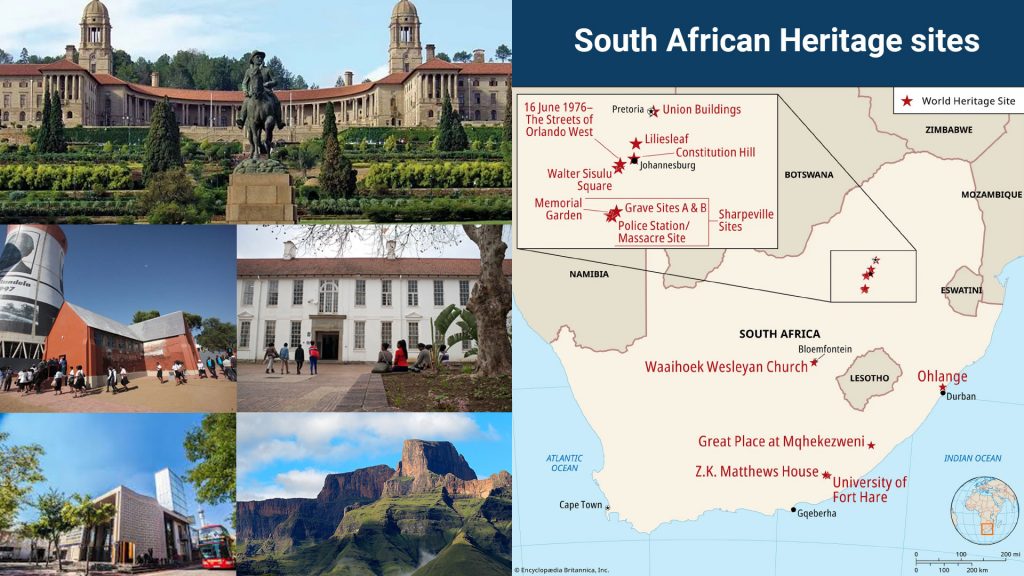
Preserving South Africa’s Heritage: AfriGIS and Geotripz Platform Highlight the Power of Geospatial Intelligence
In recognition of National Heritage Month, AfriGIS, in partnership with its Geotripz platform, is highlighting the critical role of geospatial intelligence in preserving South Africa’s cultural and natural heritage. By providing communities, government bodies and businesses with accurate location data, Geotripz helps ensure that heritage sites are recognised, protected and integrated into planning and investment decisions. Location data in South Africa reflects centuries of history, including patterns of dispossession and exclusion. Through the use of remote sensing, drones and contextual mapping, geospatial intelligence reveals communities historically left out of formal systems and makes previously invisible sites from ancestral lands to rural homesteads and community gathering points visible and permanent. “Maps are more than just coordinates they are instruments of inclusion and recognition,” says Kshetra Govindasamy, Director at Geotripz Spatial Solutions (AfriGIS). Clinton Heimann, Acting Director-General for DLRRD and Co-Chair for UN-GGIM, adds: “If a site is not documented, it is at risk of being erased by development. Geospatial intelligence makes heritage visible and permanent in the systems that guide land use and investment.” Beyond safeguarding landmarks, the Geotripz platform visualises intangible and natural wealth by overlaying cultural landmarks alongside ecological sites to provide a comprehensive view of the heritage landscape. This contextual insight enables sustainable development, informs conservation strategies and supports ESG and carbon-friendly initiatives, while empowering communities to see and interact with the heritage around them. “When people see their heritage respected in official systems, it validates their dignity. That recognition builds trust, and trust is what binds a society together,” says Heimann.
Read More