SA’s multiple ‘acceptable’ versions of addresses are a threat to banking KYC compliance
AfriGIS (Pretoria, South Africa – 21 April 2026)

In the South African financial sector, a significant 50 million-point complexity problem exists regarding the location data KYC processes rely on. While organisations invest heavily in artificial intelligence and advanced risk modelling, these high-tech defences are often undermined by a fundamental data quality issue: incomplete or fragmented address information.
The challenge is not a scarcity of data, but rather how that data is structured. South Africa has roughly 10 million unique physical locations, yet there are over 50 million valid, “acceptable” aliases for these same places. The gap between an address being “sufficient” for delivery and being “complete” for compliance represents a material risk to operational efficiency and profitability.
The architecture of location intelligence
South Africa’s address landscape is a complex mosaic. A single property might be identified by a suburban street name, a municipal erf number, a sectional title reference, or a farm portion description. These are all legitimate identifiers, but when different departments – from onboarding and credit, to insurance and collections – capture these variations inconsistently, the organisation loses its single source of truth.
Without a cohesive structure, a customer may exist as multiple entities within the same system. This fragmentation introduces uncertainty into risk modelling and prevents organisations from connecting critical data points.
Strengthening KYC and FICA compliance
Address fragmentation easily goes from being an administrative nuisance to a security gap. If an organisation cannot recognise that different address formats represent the same physical location, it becomes easier for illicit activities to go undetected.
The National Address Dictionary as a strategic asset
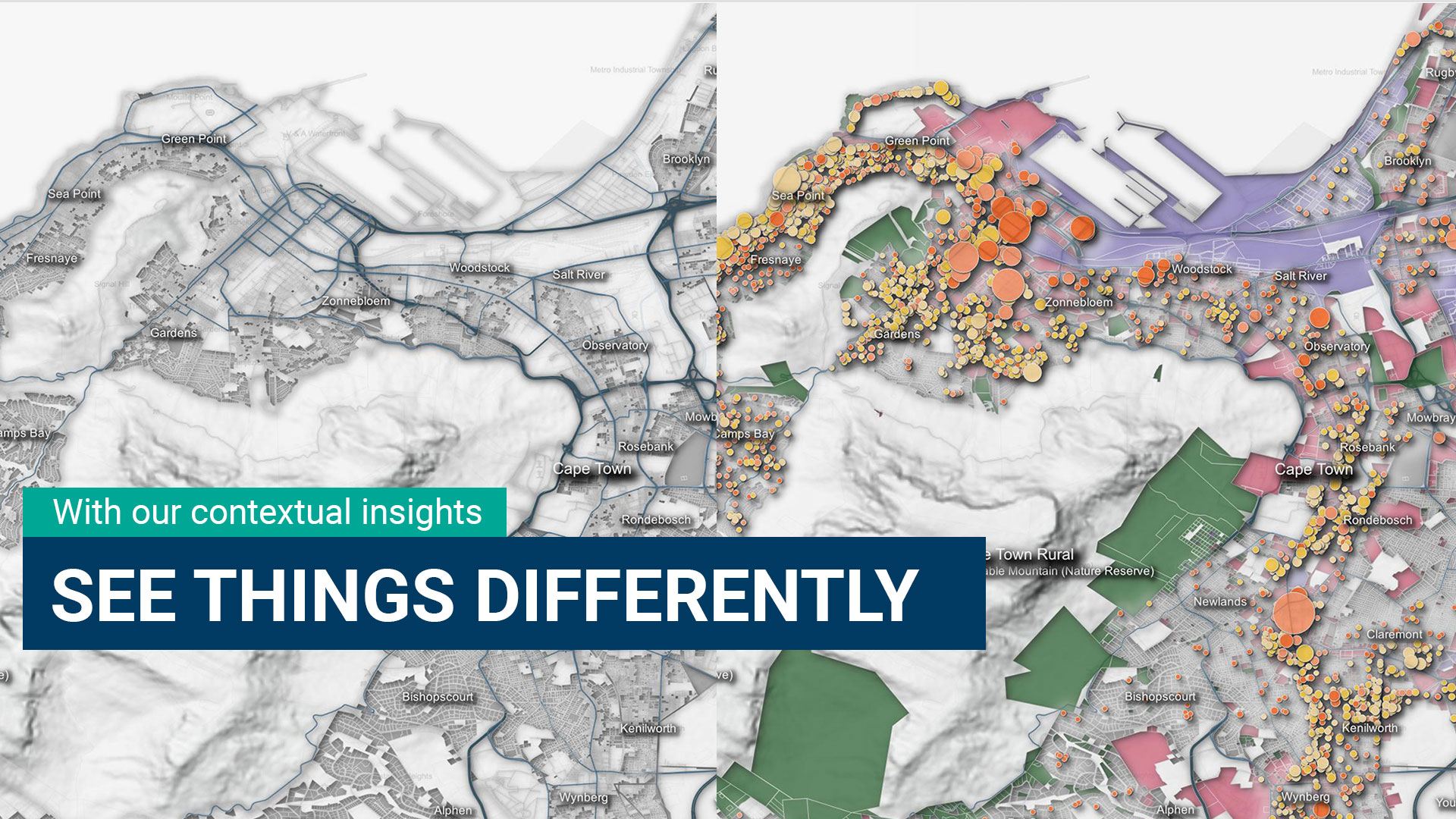
Solving the address problem requires moving from simple coordinates to verified contextual insights. By structuring address data as a set of standardised, validated components linked to a precise geospatial location, organisations can transform a liability into a strategic asset.
AfriGIS provides this clarity through the National Address Dictionary (NAD), which reconciles over 14 distinct South African address types into a single, compliant schema. Linking multiple aliases to a single spatial reference point allows financial organisations to:
- Standardise across silos: Ensure every department accesses verified, consistent data.
- Enrich with context: Layer addresses with demographic insights, environmental risk factors, and proximity data.
- Detect anomalies: Identify mismatches between declared information and physical reality to uncover potential fraud.
Precision as a foundation for growth
In a shifting regulatory environment where precision is a global mandate, moving from “almost accurate” to verified intelligence is essential. Transitioning to a structured data environment that is ISO20022 compliant reduces risk across the business and improves customer experience.
By mastering the complexity of the South African address landscape, organisations ensure they are able to both find their customers, as well as truly understand the context of where they do business.