Shuttered stores and the streets delivery drivers give up on: The multibillion-rand cost of failing maps
AfriGIS (Pretoria, South Africa – 23 March 2026)
A delivery driver idles on a nameless corner in a sprawling Gauteng settlement while, 50 km away, a utility planner stares at a transmission blueprint that fails to match the ground beneath it. Both are victims of a growing digital irony: there are more digital “dots” on maps than ever before, yet South Africa is increasingly lost in the data gaps between them.
In an economy where profit margins and infrastructure budgets are being squeezed to a sliver, the cost of “near enough” location data is leading to dozens of massive store closures and the digital exclusion of entire communities from e-commerce.
Moving beyond points on a map
The failure to see locational data as more than just coordinates is costing the country billions in aborted logistics, failed retail expansions, and infrastructure projects that get delayed before the first servitude is even signed.
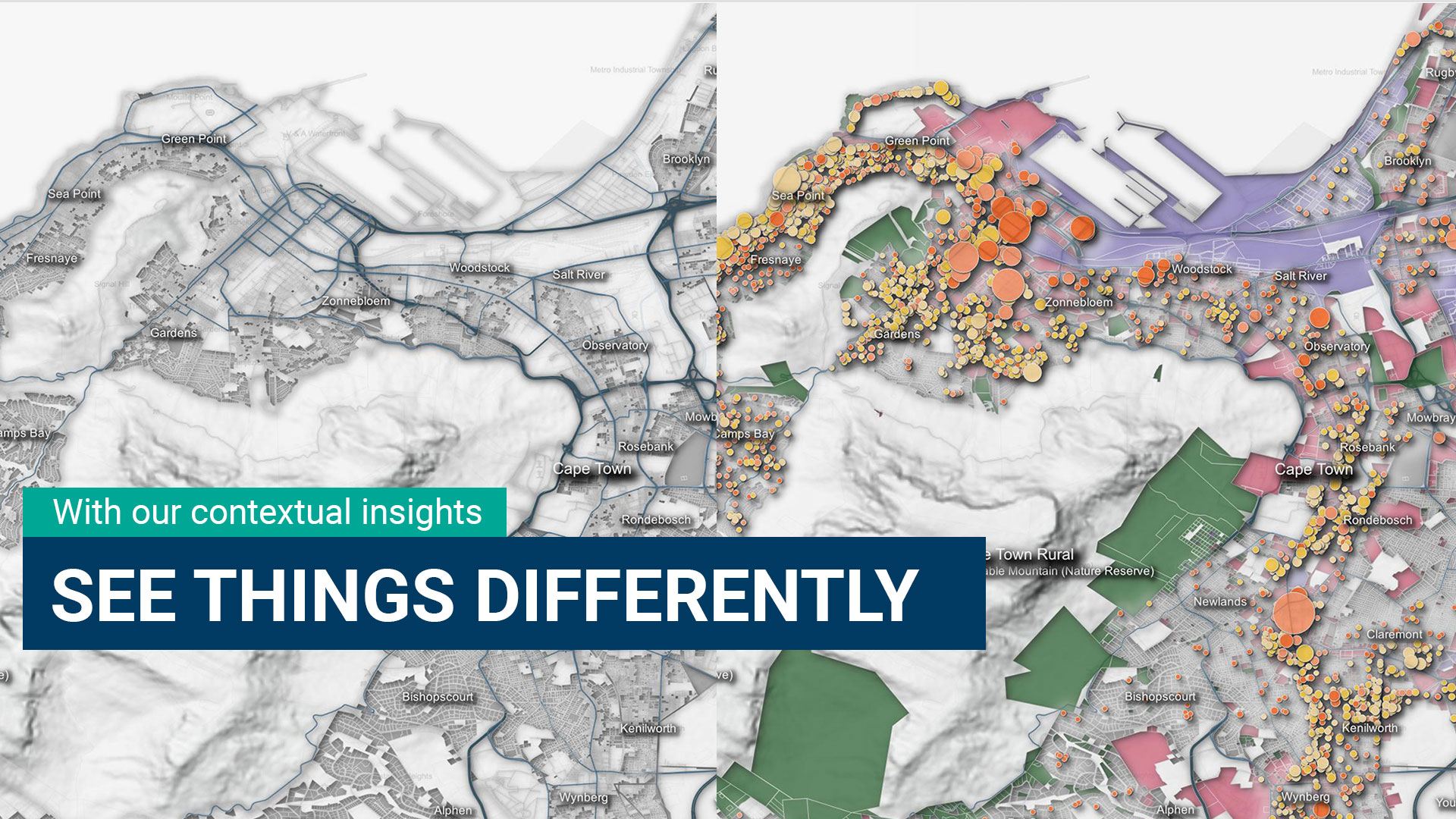
Re-asserting South Africa’s economic momentum doesn’t require a new sort of figurative map. What is needed is a shift from seeing locational data as simple points to seeing them for what they are: an unrivalled base for contextual insights that can bridge the gap between abstract data and real-world decision intelligence.
The high price of the “last mile”
The crisis of the “last mile” in e-commerce is rarely about a customer not being home. It is more common for a delivery to fail because the driver simply could not find the listed address. When an e-retailer loses part of a paper-thin margin on a failed delivery, the losses compound. If the address is difficult to find, it will not be easier the second time.
The retailer then loses even more money because of the higher costs of returning the item to the original supplier rather than a local distribution warehouse.
This spatial friction is equally present in infrastructure planning. As informal settlements expand, the window to secure a servitude for a substation or a transmission line is narrow. If planners rely on inaccurate location data, they may find a settlement has moved in a different direction, rendering the “ideal” spot for infrastructure a missed opportunity.
The multimillion-rand geography of failure
The retail sector offers an expensive lesson in spatial intelligence. Last year, a major national retailer was forced to shutter approximately 20 stores because they were fundamentally mismatched with their surroundings. These are multimillion-rand bad decisions born of the assumption that being “in the ball-park” is sufficient.
Successful trade mapping requires a single, definitive answer to a complex set of needs. A fast-food franchise, for instance, operates on variables that must align perfectly: it must sit on a primary taxi route, be within sight of a high-traffic grocery anchor, and target a specific income demographic – all while maintaining a calculated distance from competitors.
If simply “most” of the variables are accounted for in the trade mapping exercise, there is no guarantee that a venture will work out. Missing a single factor, such as taxi route insights, can be the difference between a thriving outlet and a shuttered store.
Where global tech giants stumble
This local nuance is where global tech giants often fail. A postal code might be a pinpoint in London, but in a South African context, it is a blunt instrument. A single South African code can mask dozens of different economic realities, containing anything from a few city blocks to 49 suburbs.
Real commercial and economic challenges relating to the physical world cannot be solved with “more data”. Strategy is built on insights, not volume.
Verified data is the only guard against guesswork. Building a database for the informal economy, such as a Spaza shop registry, defies automation. It requires coordinating with local traditional leaders to confirm land allocations that do not exist in any municipal ledger.
A blueprint for precision
AfriGIS has spent 28 years establishing itself as the verified local source of truth in the African geospatial arena. The narrative is shifting from “price per data point” to “value per successful decision”.
The AfriGIS leadership in this space is built on three distinct pillars:
- The “verified” standard: The maintenance of the most comprehensive National Address Dictionary (NAD) for South Africa, containing over 53 000 000 searchable addresses, including unmapped informal settlements and complex sectional titles.
- UN-Aligned intelligence: As the only local provider aligning with the United Nations Global Geospatial Information Management (UN-GGIM) principles, AfriGIS treats geospatial data as critical national infrastructure.
- The technical edge: By leveraging GeoServer for open-source integration and bespoke API support, organisations are provided with the flexibility to scale without being trapped in rigid, global technology stacks.
In the geospatial ecosystem, “verified” is the most closely guarded label. It represents a move away from the “good enough” dots used to find a coffee shop, toward the surgical precision needed to power a national economic blueprint.
Ensuring exactly where we are standing is the only way to ensure exactly where we are going.