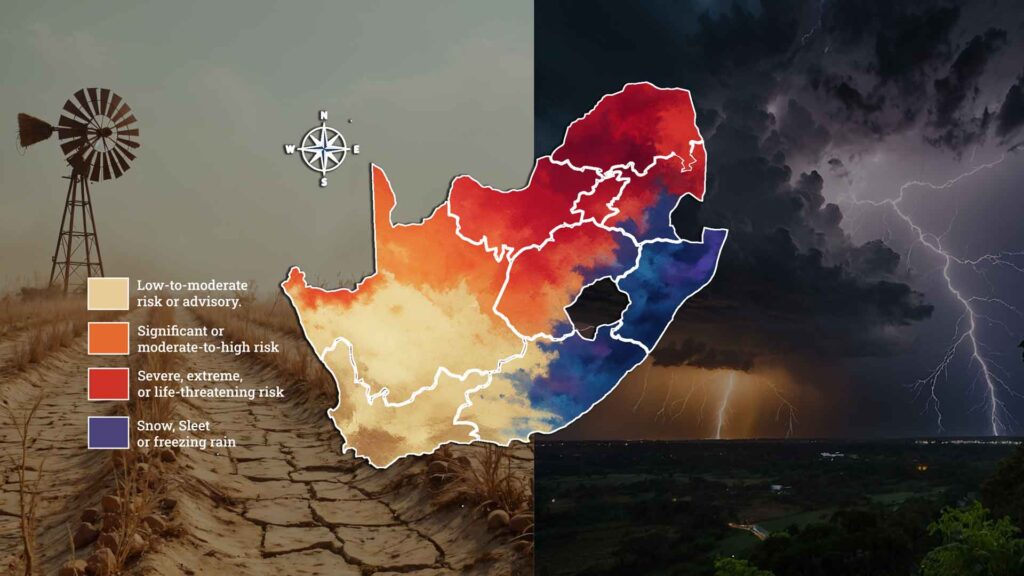
As South Africa navigates its ongoing water constraints, the strained national resource is becoming a core operational and governance variable, instead of just a sustainability topic. Across sectors, boards and executive teams are engaging with water risk in structured, practical ways, driven by the realities of maintaining operational continuity rather than abstract compliance requirements.
Historically managed within corporate social responsibility (CSR) frameworks, water is now approached as a fundamental pillar of business resilience. In the South African context, water risk is not a distant or theoretical issue. It is highly localised, frequently linked to infrastructure performance, supply stability, and municipal systems.
From awareness to operational clarity
What is notable is that organisations are already showing a growing focus on understanding how water risk translates into operational impact.
In water-intensive sectors, businesses are investing in improved treatment capacity, refining supply strategies, and working closely with public sector stakeholders to maintain system reliability. This marks a big shift from viewing water as a compliance issue to treating it as part of day-to-day operational planning.
A practical approach to disclosure
Evolving disclosure standards are reinforcing the need for greater precision. As the JSE and CIPC move toward International Financial Reporting Standards (IFRS) S1 and S2, organisations must demonstrate exactly how resource-related risks affect financial performance.
This is not introducing a new burden so much as formalising what leading organisations are already doing – linking risk to operational and financial outcomes in a structured way. For boards, this represents an opportunity to strengthen oversight. Clearer visibility of water dependencies allows for more confident decision-making and targeted investment.
Improving visibility at the asset level
A crucial development in this space is the increasing availability of granular, location-specific data. Traditional risk indicators, such as regional rainfall patterns, are now complemented by detailed insights into infrastructure conditions and localised constraints.
In practice, much of South Africa’s water intelligence already exists, but it remains highly fragmented across an estimated 200 000 individual technical assessments and monitoring reports. The challenge is extracting consistent, actionable insight at scale.
This is where integrated, spatially enabled data approaches add massive value. By consolidating multiple data sources into a single, verified source of truth, they provide a unified operational view.
Leveraging foundational layers like the National Address Dictionary (NAD) allows operators and underwriters in sectors such as mining and insurance to move beyond generalised assumptions. They can understand the specific conditions under which assets may be affected, turning abstract data into true contextual insights.
A measured shift in perspective
The reframing of water risk is ultimately about improving understanding. For boards and executives, the focus is increasingly on asking clear, actionable questions:
- Where are our operations most exposed?
- What conditions would disrupt continuity?
- What interventions are required, and where?
With the right location intelligence, these questions are becoming easier to answer. Water is not an unpredictable external threat; it is a manageable, location-specific variable. Solutions like Resolve Water provide a scalable data foundation to manage this risk at an operational level, ensuring that organisations can operate reliably in constrained environments and turn resilience into a competitive advantage.